




As the race for the 2027 presidential election gathers momentum, Nigeria’s political landscape is already shifting like a chessboard before the first move. Major political bigwigs are jostling for party tickets, testing alliances, and calculating the odds of securing the ultimate prize: Aso Rock. Permutations have begun in earnest, with analysts and party insiders reading between the lines of every handshake and every press statement. At the center of these calculations are some of the most recognizable names in Nigerian politics: former Vice President Atiku Abubakar, former Anambra Governor Peter Obi, former Transport Minister Rotimi Amaechi, and former Kano Governor Rabiu Kwankwaso.
Each of these men carries political weight, regional influence, and a base that believes he represents the best chance to dislodge the incumbent, President Bola Tinubu. Tinubu himself is widely regarded by political observers as a master strategist, a man who understands the mechanics of power better than most. Beating him will not be easy. It will require not just popularity, but structure, resources, and most importantly, unity among opposition forces. Whether that unity will materialize remains the great unknown of 2027.
The most delicate variable in this equation is the willingness of these aspirants to step down for one another under the banner of a single party. Right now, much of the speculation centers on the African Democratic Congress, ADC, which has quietly become a possible platform for an opposition coalition. But the question hanging over the ADC is simple: who will blink first? And more importantly, who will be willing to sacrifice personal ambition for the greater good of a unified front?
Atiku Abubakar remains a central figure in this debate. The former Vice President has pursued the presidency since 1992, and his ambition has not dimmed with age. For Atiku, 2027 may represent one last shot at realizing a lifelong dream. But his candidacy faces a structural hurdle: the argument that it is still the turn of the South to produce the president. After eight years of Muhammadu Buhari from the North, many within the political class believe power should remain in the South for another term. That arrangement does not favor Atiku, and whether he will adhere to it in principle is a matter of political conscience. Based on history, many doubt he will. Atiku’s camp has always played hardball, and stepping down for a southern candidate would require a level of self-restraint he has not shown before.
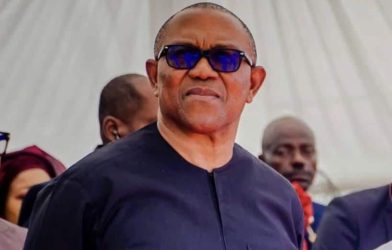
This is where Peter Obi enters the frame. Obi’s performance in the 2023 election proved that he commands a movement that transcends traditional party lines. His supporters, often called the “Obidients,” see him as the face of a new Nigeria, one less tethered to the old guard. But Obi’s path to the ADC ticket is far from clear. The party’s structure, insiders say, is already leaning toward Atiku. For Atiku, Obi’s movement represents a useful support base to stay afloat, but not necessarily a platform he is willing to surrender. If Atiku remains a stumbling block, Obi may be forced to look elsewhere.
That “elsewhere” could be the National Democratic Congress, NDC. Unlike the ADC, the NDC is currently free of the kind of internal infighting that has plagued other parties. It has no entrenched godfather dictating its direction, no legacy structure dominated by a single aspirant. For now, it is clean. But that could change the moment Obi walks in. His arrival would bring with it the same energy and attention he brought to the Labour Party in 2022, when he left the PDP and captured national imagination. That move shocked the political establishment. A move to the NDC in 2027 could do the same.
There are strong pointers that Obi will not secure the ADC ticket. The party’s machinery is gradually being aligned with Atiku’s network, and it is unlikely that Atiku will hand over the reins without a fight. If Obi stays and loses the primary, he risks being sidelined. If he leaves, the NDC offers a ready-made alternative, a platform where he can once again define the narrative on his own terms. It would be a repeat of 2022, but with higher stakes and greater visibility.
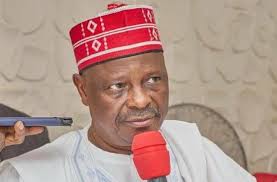
Kwankwaso’s role in this unfolding drama cannot be ignored. The former Kano Governor commands significant influence in the North, and his political base remains loyal. Like Obi, he is also weighing his options. A joint ticket or alliance between Obi and Kwankwaso under the NDC would be a game-changer. It would combine Obi’s southern and youth appeal with Kwankwaso’s northern structure, creating a formidable challenge to both Tinubu and any coalition the ADC manages to build. The NDC, in that scenario, would transform from an obscure party into a national force overnight.
Of course, this is all speculation for now. Politics in Nigeria is fluid, and alliances can shift in weeks, sometimes days. But the underlying reality is clear: the opposition’s best chance in 2027 lies in unity. Divided, they will hand Tinubu an easy victory. United, they could force a real contest. The ADC was supposed to be that unifying platform, but with Atiku’s shadow looming large, it may end up replicating the same internal conflicts that weakened the opposition in previous cycles.
Obi’s supporters argue that he has already shown he is willing to sacrifice for the greater good by engaging across party lines. But they also insist that sacrifice must go both ways. If Atiku refuses to step aside, they say, Obi owes no one the duty to play second fiddle. The NDC then becomes not just an option, but a necessity. For Kwankwaso, the calculation is similar. He has always positioned himself as an alternative to the status quo, and joining forces with Obi under a new banner could finally give him the national reach he has long sought.
The NDC’s advantage is its neutrality. It is not burdened by the baggage of the PDP or the APC. It has no history of failed primaries or bitter court cases. It offers a fresh start, and in Nigerian politics, fresh starts can be powerful. Voters are tired of recycling the same faces under different party logos. A new platform with new energy could capture that fatigue and turn it into votes.
But fresh starts come with risks. Building a party structure from scratch is expensive and time-consuming. It requires funding, grassroots mobilization, and a clear message. Obi proved he could do it in 2023 with limited resources. Kwankwaso has the network to complement that effort. Together, they could make the NDC a serious contender. Alone, each risks splitting the opposition vote and handing victory to Tinubu on a silver platter.
This is why the next few months will be crucial. Party primaries, backroom negotiations, and public statements will all serve as indicators of where these aspirants are headed. Atiku will test his influence within the ADC. Obi will test the patience of his movement. Kwankwaso will test the waters for a broader coalition. And Tinubu, from his vantage point, will watch it all unfold, ready to exploit any cracks.
For now, the signal is clear: I see Obi and Kwankwaso moving toward the NDC. It is not yet a done deal, but the logic is compelling. The ADC may offer a coalition on paper, but in reality, it looks like another battleground for old rivalries. The NDC offers something different: a clean slate, a chance to rewrite the rules, and an opportunity to build something new.
Whether Obi and Kwankwaso will seize that opportunity remains to be seen. But if they do, 2027 will not just be another election. It will be a referendum on whether Nigeria’s political future belongs to the old guard or to a new generation willing to break away and chart its own course.
Emeka Monye Is A Journalist



Comments are closed