




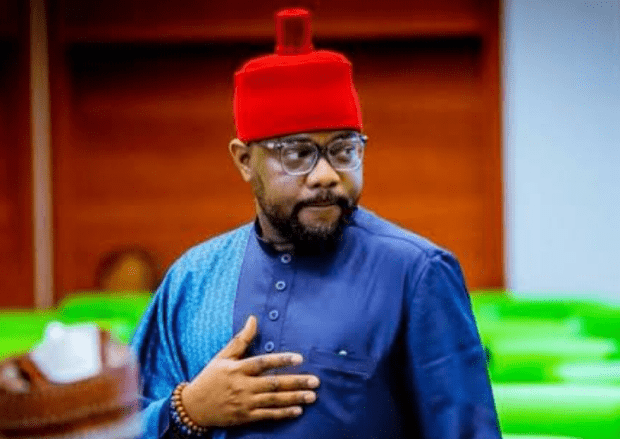
The tenth session of the National Assembly has a filthy image in the mindsets of millions of Nigerians. The National Assembly with Senator Godswill Akpabio who is alleged to have emerged as a Senator through a very ethically challenged modus operandi given that he never contested the party primary but was aided by the federal high Court and then an unknown political quantity from Kaduna State as speaker, is disreputable for being subservient to the whims and caprices of President Bola Ahmed Tinubu.
Ironically, within the same National Assembly are few charismatic and patriotic Nigerians with clearly people’s focused mandates and agenda which they have methodically implemented in the last three years and some months that they were inaugurated as federal law makers.
Besides, in a political climate where rhetoric often outruns results, the record emerging from Ideato North and Ideato South Federal Constituency offers a compelling counter-narrative. Ikenga Imo Ugochinyere, a member of Nigeria’s 10th House of Representatives, has quietly assembled a portfolio of constituency interventions that (if independently verified as he repeatedly challenges the public to do) reflects an uncommon blend of grassroots responsiveness and political resilience. That this record is being built from the minority benches of the Green Chamber makes it even more instructive in understanding how influence in Nigerian politics is not always a function of numerical strength, but of strategic engagement, constituency intimacy, and relentless visibility.
The conventional wisdom in Nigeria’s legislative politics is that majority party lawmakers enjoy disproportionate access to federal resources, committee leverage, and executive goodwill. Minority members, by contrast, are often consigned to the margins, their voices loud but their reach limited. Yet, Ugochinyere’s trajectory suggests that this binary is not absolute. By focusing on tangible, verifiable projects (particularly in sectors that directly affect daily life), he appears to have reframed what effective representation can look like outside the corridors of central power.
Consider the emphasis on education. Across multiple communities in Ideato North and South, school reconstruction and rehabilitation projects have reportedly been completed, ranging from primary institutions to secondary and technical schools. In a region where dilapidated classrooms and inadequate learning facilities have long undermined educational outcomes, such interventions (if sustained) could have generational impact. Education infrastructure is not merely about buildings; it is about restoring dignity to public schooling and signaling to young people that their future matters. The reported distribution of over 1,000 school desks, even as it remains ongoing, points to an understanding of the small but critical deficits that shape the learning environment.
Healthcare, another chronic weak point in many rural constituencies, also features in this evolving record. The rehabilitation of community hospitals and health centres, though still ongoing, suggests an awareness that access to primary healthcare is often the difference between life and death in underserved areas. In a country where tertiary hospitals are overwhelmed and distant, functional community health facilities can dramatically reduce preventable mortality. The challenge, as always, will be ensuring that these rehabilitated centres are not just structurally sound but also adequately staffed, equipped, and maintained.
Perhaps more telling is the scale of scholarship and human capital development initiatives attributed to Ugochinyere. Supporting hundreds of students across primary, secondary, and tertiary levels over consecutive years indicates a deliberate investment in people rather than just projects. In a constituency where economic constraints frequently truncate educational aspirations, such scholarships can alter life trajectories. Beyond the immediate beneficiaries, they create a ripple effect, fostering a culture that values education as a pathway out of poverty.
Agricultural empowerment, though modest in beneficiary numbers, aligns with the economic realities of the constituency. Ideato North and South, like much of rural Imo State, depend significantly on agriculture. Training and supporting farmers, even at a limited scale, can enhance productivity, improve livelihoods, and contribute to local food security. The real test will be whether such programmes can evolve from one-off interventions into structured, scalable initiatives that integrate access to markets, credit, and modern farming techniques.
Water access remains one of the most basic yet elusive needs in many Nigerian communities. The reported rollout of borehole projects across 24 communities, with a majority already completed, speaks to a targeted approach to addressing this gap. Clean water is foundational to public health, and its availability reduces the burden of waterborne diseases while improving overall quality of life. Electrification efforts, including the installation of solar-powered streetlights and transformers, further underscore a commitment to infrastructure that extends beyond symbolic gestures. Street lighting, often overlooked, has implications for security, commerce, and social life, particularly in semi-urban and rural settings.
Roads, drainage, and erosion control projects add another layer to this interventionist profile. In southeastern Nigeria, erosion is not merely an environmental issue; it is an existential threat to communities, swallowing homes, farmlands, and roads. Facilitating erosion control projects, alongside drainage construction, reflects an understanding of the unique ecological challenges facing the constituency. While these projects are often capital-intensive and require sustained funding, even incremental progress can mitigate long-term damage.
Market development and youth empowerment initiatives round out this emerging record. The construction of market stalls, though seemingly modest, can boost local commerce and provide structured spaces for economic activity. Similarly, the distribution of motorcycles, tricycles, and buses to youths is emblematic of a broader approach to empowerment; one that seeks to create immediate income opportunities. Direct financial support, such as cash grants to constituents, while sometimes criticized as populist, can offer short-term relief in an economy marked by inflation and unemployment.
All of this points to a lawmaker who has leaned heavily into constituency service as a political strategy. In Nigeria’s electoral calculus, visibility at home often matters more than prominence in Abuja. By embedding himself in the everyday realities of his constituents, Ugochinyere appears to have built a political brand rooted in accessibility and delivery. This may also explain the significant followership that reportedly accompanied his recent movement to a new political party. In a system where party loyalty is often fluid, what endures is the bond between a politician and his base. Charisma, in this context, is not merely about oratory; it is about the ability to translate influence into outcomes that people can see and touch.
However, an honest appraisal must also acknowledge the importance of independent verification. Nigerian politics has long been plagued by inflated claims and uncompleted projects. The repeated refrain of “Go and verify” attached to these milestones is both a challenge and an opportunity. It invites civil society, media, and constituents themselves to engage in fact-checking, site visits, and documentation. If these claims withstand scrutiny, they strengthen not just Ugochinyere’s credibility but also the broader case for performance-based politics. If gaps are found, they offer a chance for course correction and greater transparency.
As the next electoral cycle approaches, the question is how this record can be effectively leveraged in the face of anticipated political opposition, particularly from the ruling All Progressives Congress in Imo State. Campaigns in Nigeria are rarely fought on policy alone; they are battlegrounds of narratives, alliances, and perception management. For Ugochinyere, the path to a successful second-term bid will likely depend on how well he consolidates his achievements into a coherent, verifiable story that resonates with voters.
First, documentation and communication must be elevated. In an era dominated by digital media, it is not enough to execute projects; they must be effectively communicated. High-quality visual evidence, before-and-after documentation, beneficiary testimonials, and geo-tagged project data can help counter misinformation and amplify impact. A dedicated digital platform that aggregates all constituency projects, updated in real time, would not only enhance transparency but also serve as a powerful campaign tool.
Second, coalition-building within the constituency will be crucial. Politics in Imo State, as in much of Nigeria, is deeply influenced by local networks; traditional rulers, community leaders, youth groups, and religious institutions. Strengthening these relationships, ensuring inclusivity in project distribution, and maintaining open lines of communication can help inoculate against opposition attacks. A constituency that feels seen and heard is more likely to defend its representative.
Third, the campaign narrative must shift from defensive to proactive. Rather than merely responding to criticisms from opponents, Ugochinyere’s team would benefit from setting the agenda. This means articulating a clear vision for a second term; one that builds on existing achievements while addressing identified gaps. Voters are not just interested in what has been done; they want to know what comes next.
Fourth, strategic engagement with the media will be essential. In a politically charged environment, narratives can quickly be distorted. Regular press briefings, opinion pieces, and media tours of project sites can help shape public perception. Leveraging both traditional and new media platforms ensures that the message reaches diverse demographics, from rural voters to urban youths.
Fifth, legal and institutional preparedness cannot be overlooked. Nigerian elections are often contested not just at the polls but also in the courts. Ensuring compliance with electoral laws, maintaining robust documentation of campaign activities, and building a competent legal team can help navigate potential post-election disputes.
Beyond campaign mechanics, there is a deeper democratic imperative that must not be ignored. The strength of any democracy lies not in the dominance of a single party, but in the protection and accommodation of diverse political interests and voices. In Imo State, as in Nigeria at large, the temptation to marginalize opposition figures or suppress dissenting views poses a real threat to democratic consolidation. It is therefore essential that all political actors (whether aligned with the ruling party or in opposition) are afforded the space to operate freely, campaign openly, and present their ideas to the electorate without intimidation.
The presence of vibrant opposition voices, including lawmakers like Ikenga Imo Ugochinyere, is not a weakness of the system; it is its safeguard. Democracy thrives on competition, accountability, and the constant testing of ideas. When political pluralism is protected, governance improves because leaders know they can be challenged, scrutinized, and ultimately replaced through the ballot. Conversely, when political space shrinks, complacency and impunity often take root.
For Ugochinyere, this broader context presents both a challenge and an opportunity. Defending not just his seat but also the principle of inclusive political participation can elevate his campaign beyond personal ambition to a cause that resonates with a wider audience. By consistently advocating for the rights of all political actors, regardless of affiliation, he positions himself as a defender of democratic norms; a stance that can attract support even from those who may not share his party loyalty but value fairness and justice.
Finally, there is the question of party dynamics. His recent defection, accompanied by a significant following, suggests a recalibration of political alliances. Managing this transition effectively (ensuring that new party structures are functional at the grassroots level, while retaining the loyalty of existing supporters), will be critical. Party identity matters, but in constituencies like Ideato, it is often the candidate’s personal brand that ultimately determines electoral outcomes.
In the end, the story of Ikenga Imo Ugochinyere is still unfolding. What is clear, however, is that his approach offers a case study in how lawmakers can navigate structural disadvantages to deliver measurable outcomes. Whether this translates into electoral success in a second term bid will depend not just on what has been done, but on how convincingly it is presented, defended, and expanded.
For now, the challenge he throws to the public (“Go and verify”) may be the most important line in this entire narrative. In a democracy that often struggles with accountability, such an invitation, if taken seriously, could help shift the culture from blind allegiance to informed choice. And in that shift lies the true test of leadership, and the enduring promise of a system where every political voice has a place and every citizen has a stake.
Emmanuel Onwuniko Writes From Abuja.




Comments are closed