




In the build-up to political independence from Britain, Nigeria stood as a frontline voice in African affairs. That role positioned the nation as a leading force on the continent — so central to African liberation and diplomacy that Nigeria was widely perceived as a potential superpower in African geopolitics.
And true to those expectations, Nigeria did not falter. The country embraced its political and economic leadership role with conviction, both before and after independence in 1960. From the corridors of the United Nations to the liberation movements of Southern Africa, Nigeria’s imprint was unmistakable.
The nation’s support for fellow African states was comprehensive. It was economic, political, social, cultural, and educational. During the dark years of colonial rule and apartheid, Nigeria opened its treasury and its classrooms. It offered scholarships to citizens of Ghana, Togo, South Africa, Zimbabwe, Namibia, and others. The Nigerian government funded the Southern African Relief Fund in 1976, contributing over $5 million — a significant sum at the time — to support liberation movements. Nigerian civil servants took a pay cut to fund the anti-apartheid struggle. Our musicians, from Sonny Okosun to Majek Fashek, became the soundtrack of African resistance. Our passports were issued to ANC leaders denied travel documents. We were, in every sense, “Africa’s Big Brother.”
Yet, tragically, these acts of solidarity have been consigned to the dustbin of history. Many of the countries that once leaned on Nigeria’s shoulders now appear unmoved by that legacy of goodwill. The sacrifices we made during their years of struggle and suffering are met today with silence, or worse, hostility.
South Africa offers the most painful example. A nation that was once an apartheid enclave emerged from decades of racial oppression with Nigeria as one of its staunchest allies. Lagos was declared an ANC operational hub. Nigerian students protested on the streets for Mandela’s release. We boycotted the 1976 Olympics and the 1978 Commonwealth Games to isolate the apartheid regime. Nigeria lost trade, investment, and diplomatic opportunities for the sake of South Africa’s freedom.
But post-apartheid South Africa has turned a blind eye to that history. Today, Nigerians in South Africa live under the shadow of xenophobia. They are hunted in their shops, assaulted in taxi ranks, and targeted in their homes. The attacks are not random. They are systematic, recurring, and often justified under the obnoxious narrative that foreigners — especially Nigerians — are “taking jobs,” “running drugs,” and “fueling crime.” That a fellow African nation would institutionalize the rejection of other Africans is not just pathetic. It is a betrayal of the Pan-African ideal.
This is not new. History is replete with patterns of anti-Nigerian and anti-foreigner violence in South Africa. We saw it in May 2008, when over 60 people were killed. We saw it again in April 2015, when shops were looted in Durban and Johannesburg. In September 2019, another wave left at least 12 dead, with Nigerian businesses torched on live television. And now, in 2026, the cycle continues. Each time, the Nigerian government issues statements. Each time, we summon the South African High Commissioner. Each time, we are promised investigations. And each time, the violence returns.
For too long, the Nigerian government has turned a blind eye and a deaf ear to the plight of its citizens abroad. Our foreign policy, once rooted in Afrocentrism, has become reactive rather than proactive. We respond to crises instead of preventing them. We preach “Africa as the centerpiece” of our diplomacy, but we have failed to define what that means in 2026. Does it mean silent diplomacy while our people are killed? Does it mean economic ties at the expense of human dignity?
The cost of inaction is no longer diplomatic — it is existential. Every Nigerian killed in Pretoria or Durban chips away at our national pride. Every looted shop weakens the confidence of our diaspora, whose remittances exceed $20 billion annually and sustain millions of families at home. Every video of a Nigerian pleading for his life diminishes Nigeria’s standing as a regional power. A nation that cannot protect its citizens abroad cannot command respect at home.
So what must Nigeria do? First, we must abandon the era of tepid press releases. Diplomacy without consequences is appeasement. The government must invoke Article 3 of the 2013 Nigeria-South Africa Bi-National Commission Agreement, which commits both nations to protect each other’s citizens. Where violations occur, there must be reciprocal measures — from visa reviews to trade sanctions. South Africa benefits from Nigerian markets, from MTN to Shoprite. That leverage must be used.
Second, Nigeria needs a Diaspora Protection Framework with teeth. We need a rapid response unit within the Ministry of Foreign Affairs and the Nigerians in Diaspora Commission, NiDCOM, capable of legal intervention, evacuation, and litigation within 48 hours of any attack. Our missions must move from being ceremonial offices to active defenders of Nigerian lives and property.
Third, we must re-educate Africa about Nigeria’s role. The younger generation in South Africa, Zimbabwe, and beyond has no memory of Nigeria’s sacrifices. Our foreign policy should include cultural diplomacy — documentaries, curriculum exchanges, and memorials that institutionalize our Pan-African contributions. If we do not tell our story, others will erase it.
Fourth, we must look inward. The reason many Nigerians migrate is because home has failed them. Unemployment, insecurity, and poor governance push our best brains into hostile environments. The ultimate protection for Nigerians abroad is a Nigeria that works. If we fix power, secure our streets, and create jobs, economic migration will become a choice, not a desperate escape.
This is not a call for war. It is a call for self-respect. Nigeria gave Africa its voice. We funded liberation when it was not profitable. We welcomed refugees when it was not convenient. We must now demand that the same humanity be extended to us.
The xenophobic attacks are not just South Africa’s shame. They are Nigeria’s test. Our founding fathers envisioned a Nigeria that would be the giant of Africa not in size alone, but in moral authority. That authority is bleeding out on the streets of Johannesburg.
History will not judge us by the speeches we made, but by the citizens we protected. The time for quiet diplomacy is over. The time for lamentations has passed.
Nigeria must act now — before the next video, before the next body bag, before it is too late.
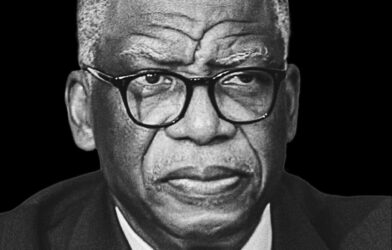
Emeka Monye Is Journalist




Comments are closed